
China’s Consul-General to Australia, Mr Shen Weilian says Australians should not be concerned by the rapid growth of Chinese investment into Australia, but should instead, seize the opportunities.
According to estimates by the IMF, Australia’s GDP grew by just under 1 percent in 2009. This means Australia was the only advanced economy recording a positive growth last year, contrasting sharply to an average contraction of 3.2 percent for other advanced economies collectively. Undoubtedly, Australia’s good performance last year should be attributed to the government’s timely stimulus policy, flexible exchange rate and healthy banking system. But, I must add that China’s robust demand for Australia’s commodities also played an extremely important role. Currently, the international financial market has been gradually stabilized, and the world economy is likely to recover. This year, China’s economy will continue to grow by about 10 percent, while Australia’s economy is expected to rise by 2.5 percent. In May of this year, Shanghai will host the World Expo, to which the Australian government has allocated more than A$80 million for its own pavilion. Australia will display its best products and services to Chinese consumers, which, I believe, will help the Chinese people learn more about Australia, and in turn facilitate new business deals between our two countries. I think China- Australia economic relations may have the following features under the new situation:
1. COMMODITIES TRADE WILL CONTINUE TO GROW STEADILY
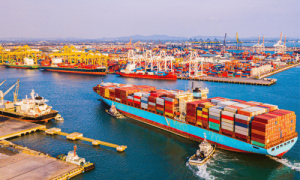
Trade of minerals and energy has become the foundation of our bilateral trade over the years. China is in the course of industrialization and urbanization. Infrastructure reconstruction, upgrading of existing industries means tremendous need of energy and resources. Meanwhile, as the world’s most important manufacturing power, China’s demand for resources will be steadfast and long-term. China is now the largest importer of Australian resources.
BHP [Billiton] revealed that its output of iron ore reached a record of 32.45million tons in fourth quarter last year, 11 percent more than the previous year, which was mainly attributed to the strong demand from China. This year, we will continue urbanization vigorously and step up construction of infrastructure. It is estimated that more than 10 million people will move from rural areas to cities every year in the coming decade, creating tremendous needs for new housing, schools, hospitals and public facilities. This is unprecedented, and will lead to a huge demand for resources.
I, therefore, believe trade of minerals and energy between the two countries will continue to grow steadily this year, and may continue for a long period of time. In addition to the trade of minerals and energy, trade in other areas will also be strengthened and deepened. Australia is well known for its agriculture and animal husbandry. Production and export of agricultural produce remain highly important to Australia. China is a country of 1.3 billion people. With the fast growing of its economy and the ever improvement of people’s living standards, China’s need for meat, dairy products, fresh fruit, wool and other commodities will surely increase.
In manufacturing, Australia, especially Victoria, is relatively advanced in auto parts production, whereas China now is the largest auto market in the world. This offers great potential for our two countries to deepen cooperation in the auto field. So far as I know, auto parts manufacturers of Victoria, Shanghai and Anhui have carried out very good co-operation last year. I believe in the future, there will be more cars designed by Australia but taking parts designed or made by China.

2. SERVICE TRADE WILL BE A NEW HIGHLIGHT
Although commodity trade plays a dominant part in two-way trade, service trade is growing year by year. Bilateral trade in service has expanded from A$3.65 billion in 2004 to A$6.2 billion in 2008. China is now Australia’s number one source of international students and fifth largest source of tourists. Australia’s service industry is highly competitive and of world-class, generating three-quarters or more of its total GDP. Australia is strong in areas of education, tourism, finance, city planning and design, while China is relatively backward. As China strives to develop its tertiary industry and restructuring of its economy, our two countries are highly complementary to each other in service trade in the coming years.
We have all the reason to believe that service trade is to become a new highlight in bilateral business ties.
3. ACCELERATION OF TWO-WAY INVESTMENTIS INEVITABLE
It is true that the pace of Chinese investment to Australia has been quickened over the past years. According to Australian media reports, China is now Australia’s third largest FDI source country, following the US and UK. I have noticed that some people in Australia are getting worried about the quick growth of Chinese investment to Australia. In my opinion, these worries are entirely not necessary.
Trade and investment are always interactive in international business. It is natural that two-way investment increases as a result of rapid growth of two-way trade. If there had been no increase of mutual investment, trade could not be sustainable. China now is Australia’s number one trading partner as well as the largest importer of Australian produce, which naturally requires more and more Chinese companies to invest in Australia. In the ‘70s or ‘80s of the last century, we saw the same pattern initiated first by Japan and then Korea. The success in trade naturally leads to success in investment, which resulted in being mutually beneficial and closely integrated. China is of no exception.
In fact, the stock of Chinese investment in Australia is still relatively small, ranking only 15th at the end of 2008. This does not commensurate with the fast growth of our bilateral trade. I believe Chinese investment will continue to grow and play an active role in Australia’s market, strengthening further our bilateral economic and trade relations. Chinese business to Australia is looking for reliable or ideal business partners rather than seeking control or domination.
Taking mineral and energy resources for example, China, being an important manufacturing power, requires a great amount of resources annually, whereas Australia is rich in resources that needs foreign investment for exploitation. Our two countries are highly complementary to each other. While securing overseas supplies of resources and energy for itself, China continues to be a reliable and long-term market for Australian mineral and energy resources.
China’s need also helps Australia to remain competitive among world major suppliers of minerals and energy. Over the past year, the growing Chinese investment played an important role in keeping Australia’s mining industries afloat and increasing national revenue. Seeing China being so active to invest abroad, some countries extended preferential policies to attract Chinese investment. Australia is one of these countries that has attracted Chinese business because of its sound natural environment and good geographic location.
But, I must add that Australia should seize or value highly these opportunities as they do not come by so easily. I also wish to use this opportunity to comment briefly on the understanding of state-owned enterprises. The Chinese government has long been engaged in reform of state-owned enterprises. As a result of years of efforts, many state-owned enterprises have now become independent entities, responsible for their own losses or gains and equally engaged in world competition. Most of the Chinese companies residing in Australia have their stocks listed in stock exchanges and their business operation is very much in line with world practices. Their choice to invest in Australia is completely based on their own decision.
To be frank, as Consul-General, I learn about Chinese investment here from media coverage, the same way you do.
It is therefore entirely groundless to accuse the Chinese government of controlling business operations abroad. The cooperation between China and Australia has huge potential and a bright future. Strengthening practical cooperation and seeking mutual benefit are in conformity with the fundamental interests of our two countries and people. I am ready to join you all to continue in advancing our bilateral relationship to a new level in the 21st century. ■
This the speech delivered by Mr. Shen Weilian, Consul-General of the People’s Republic of China at a China Market Forecast 2010 Luncheon in Melbourne. To read the full transcript, click here.